LAV PRATAP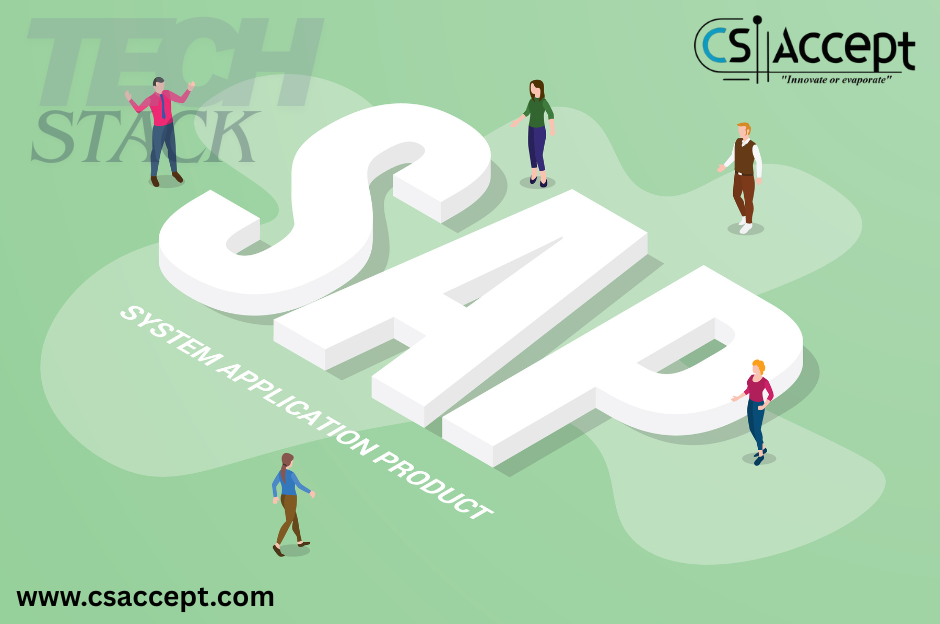
What is SAP? Write the full details with suitable example – SAP is a full business management suite that integrates Finance, HR, Sales, Production, Inventory, and more into one centralized digital system with real-time data and automation.
What is SAP?
SAP stands for Systems, Applications, and Products in Data Processing.
It is a world-leading Enterprise Resource Planning (ERP) software developed by SAP SE, a German company.
SAP helps organizations integrate all business operations into a single centralized system for smooth information flow and better decision-making.
Why is SAP used?
Businesses use SAP ERP to:
✔ Improve productivity & efficiency
✔ Reduce data duplication
✔ Automate business processes
✔ Provide real-time data insights
✔ Enhance collaboration between departments
Modules in SAP (Major Functional Areas)
SAP has different modules for different business operations:
| Module | Full Form | Purpose |
|---|---|---|
| SAP FI | Financial Accounting | Manages company finances, ledgers, statements |
| SAP CO | Controlling | Cost management, budgeting, profit analysis |
| SAP MM | Materials Management | Purchase & inventory management |
| SAP SD | Sales and Distribution | Manages sales, billing, shipping |
| SAP HCM/HR | Human Capital Management | Payroll, employee data, hiring |
| SAP PP | Production Planning | Manufacturing and production control |
| SAP QM | Quality Management | Ensures product quality compliance |
| SAP CRM | Customer Relationship Management | Customer services & marketing |
| SAP PM | Plant Maintenance | Machinery maintenance operations |
| SAP WM | Warehouse Management | Storage, picking, goods movement |
Each module integrates with others, making data consistent across the organization.
How SAP Works (Simple Explanation)
Instead of each department having separate software and data,
SAP stores all information in one centralized database.
So if a sales order is created in SAP:
- Sales department sees the order in SAP SD
- Purchasing orders needed items through SAP MM
- Finance updates revenue using SAP FI
- Warehouse dispatches goods via SAP WM
➡ All data updates in real-time across all modules
Real-Life Example of SAP
Suppose a company like Coca-Cola receives an order:
1️⃣ Sales team enters customer order in SAP SD
2️⃣ System checks inventory (SAP MM/WM)
3️⃣ If material is low → automatic purchase order generated
4️⃣ Production starts using SAP PP
5️⃣ Quality check done with SAP QM
6️⃣ Goods delivered to customer
7️⃣ Invoice generated automatically (SAP FI)
8️⃣ Profit & costing calculated (SAP CO)
Everything is automated, fast, and accurate.
Who uses SAP?
Top global companies use SAP, for example:
More than 90% of Fortune 500 Companies use SAP ERP.
SAP Cloud & Latest Technologies
SAP also supports:
- SAP S/4HANA – Next-gen ERP on HANA Database (very fast processing)
- SAP Fiori – Modern user interface (web and mobile)
- SAP ARIBA – Cloud procurement network
- SAP SuccessFactors – Cloud-based HR management
- SAP Analytics Cloud – Data analytics & BI
Skills & Career Opportunities in SAP
You can build a career as:
- SAP Consultant
- SAP Functional Analyst (FI/MM/SD etc.)
- SAP Basis Administrator
- SAP Developer (ABAP, UI5, Fiori)
- SAP Data Analyst
👉 SAP professionals are highly in demand and get excellent salary packages.
Summary (Quick Revision)
| Feature | SAP Advantage |
|---|---|
| Database | Centralized & Real-time |
| Business Integration | All departments connected |
| Automation | Less manual work |
| Accuracy | Reduced errors |
| Scalability | Supports small to large organizations |
History & Evolution of SAP
| Year | Event |
|---|---|
| 1972 | SAP founded by five ex-IBM engineers in Germany |
| 1973–1980 | Introduced first financial accounting software |
| 1992 | SAP R/3 ERP launched (Client-Server model) |
| 2015 | SAP S/4HANA launched (In-Memory database, Cloud support) |
| Present | SAP becomes the world’s #1 ERP with AI, Cloud, IoT integration |
Today SAP operates in over 180 countries with over 400,000+ customers.
SAP Architecture (3-Tier Architecture)
SAP ERP is based on a Three-Tier architecture:
| Layer | Purpose |
|---|---|
| Presentation Layer | User interface (SAP GUI, Fiori, Web browser) |
| Application Layer | Business logic, processing rules |
| Database Layer | Stores company data (transactions, records) |
➡ This structure makes SAP secure, flexible, and high-performance.
SAP HANA – The Backbone of Modern SAP
SAP HANA (High Performance Analytic Appliance):
✔ In-memory database (data stored in RAM → ultra-fast access)
✔ Real-time analytics
✔ Handles very large datasets
✔ Used by modern SAP systems like S/4HANA
Example:
Monthly financial reports that took 5 hours can be generated in 5 seconds using HANA.
SAP R/3 vs SAP S/4HANA (Important Difference)
| Feature | SAP R/3 | SAP S/4HANA |
|---|---|---|
| Database | Any (Oracle/SQL etc.) | Only SAP HANA |
| UI | SAP GUI | Fiori + GUI |
| Speed | Slower | Lightning Fast |
| Deployment | Mostly On-Premise | Cloud + On-Premise |
| Reporting | Batch reports | Real-time analytics |
Companies are currently upgrading from R/3 to S/4HANA for better performance.
SAP Integration with New Technologies
SAP supports modern technologies:
| Technology | Use in SAP |
|---|---|
| Artificial Intelligence (AI) | Predictive analytics, Automation |
| Internet of Things (IoT) | Real-time machine monitoring |
| Machine Learning | Automated decision-making |
| Blockchain | Secure transactions, supply chain |
| Cloud Computing | Remote access, scalability |
| Robotic Process Automation | Reduces repetitive tasks |
Example:
Machines in a factory automatically send breakdown alerts to SAP PM.
Types of SAP Consultants
| Type | Skills Required | Job Role |
|---|---|---|
| Functional Consultant | Business Process understanding | Configure SAP modules (FI, MM, SD) |
| Technical Consultant | Programming, DB | Develop features, ABAP coding |
| Basis Consultant | Server, OS, DB admin | System installation & maintenance |
| Security Consultant | Authorization knowledge | Manage roles & data access |
➡ Excellent job growth with Global Salary Packages.
Example Scenario – SAP in a Retail Store
A store like Reliance Smart uses SAP:
- Customer buys items → Data updated in SAP SD
- Stock reduces from SAP MM
- New stock ordered automatically
- Accounting updated in SAP FI
- Profit and cost analysis done via SAP CO
- HR (HCM) handles payroll of employees
Outcome:
Real-time inventory, faster billing, reduced costs.
Key Advantages of SAP
| Advantage | Description |
|---|---|
| Data Integration | All departments connected |
| Real-Time Operations | Faster decision making |
| Improved Security | Controlled access & data protection |
| Scalable System | Suitable from SMEs to MNCs |
| Global Standard | Multiple currencies, languages supported |
Challenges & Disadvantages
| Disadvantage | Reason |
|---|---|
| High Cost | License, implementation, maintenance |
| Complex to Use | Requires expert training |
| Implementation Time | May take months to years |
➡ But benefits are much higher in the long run.
Final Summary
SAP is a full business management suite that integrates Finance, HR, Sales, Production, Inventory, and more into one centralized digital system with real-time data and automation.