LAV PRATAP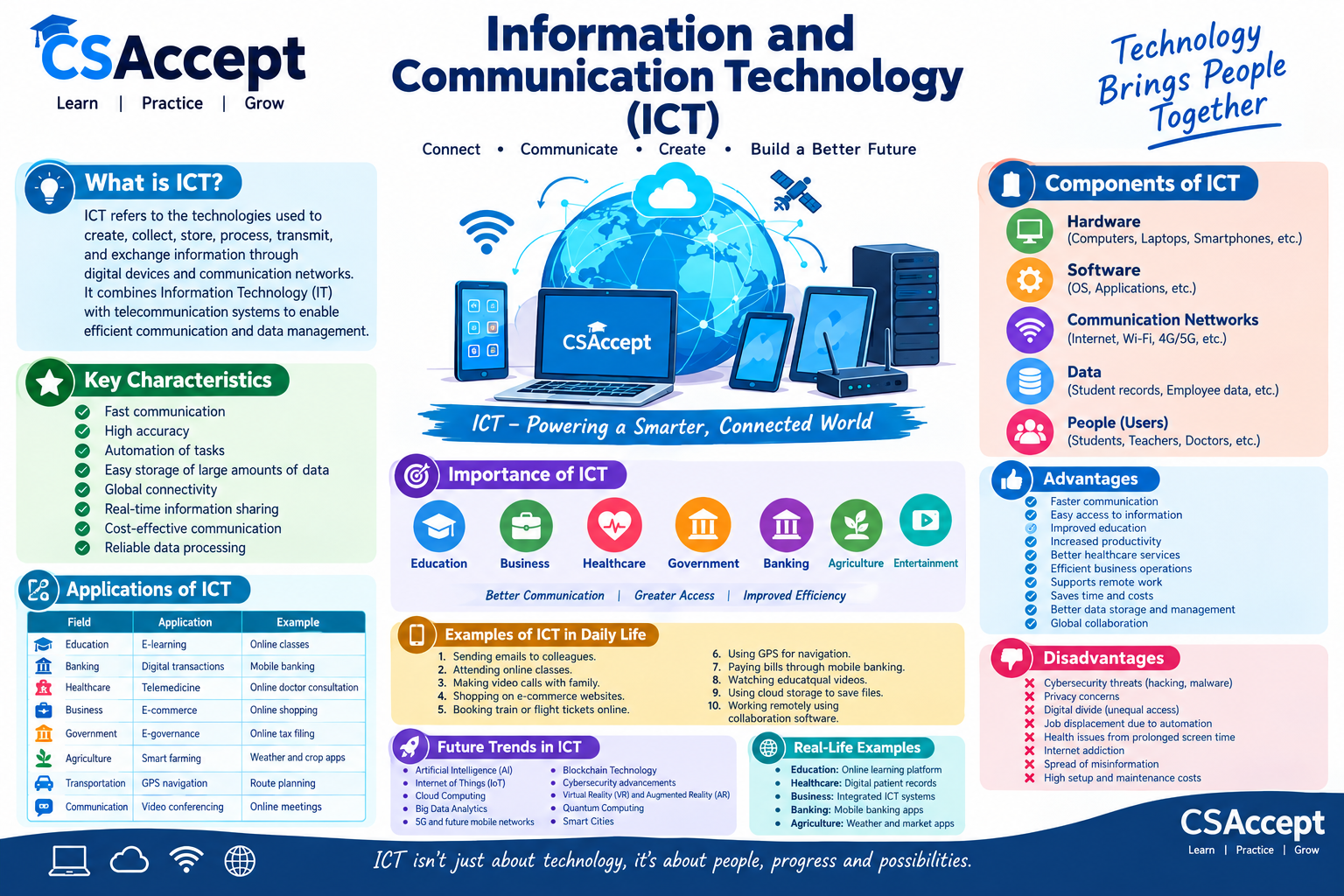
csaccept.com is a computer awareness website dedicated to providing reliable and easy-to-understand information about computer technology and digital safety. The website focuses on educating students, beginners, and general users about computer basics, cyber security, emerging technologies, and practical IT skills. Through informative articles, quizzes, and real-life examples, csaccept.com aims to increase digital literacy and help users stay safe and confident in today’s technology-driven world.
 Facebook ………………..
  Instagram ……………..
  Twitter ( X ) ……………..
  YouTube
Information and Communication Technology (ICT)
1. What is ICT?
Information and Communication Technology (ICT) refers to the technologies used to create, collect, store, process, transmit, and exchange information through digital devices and communication networks. ICT combines Information Technology (IT) with telecommunication systems to enable efficient communication and data management.
2. Definition
ICT is the integration of computers, software, communication networks, and digital devices that help people access, process, store, and share information quickly and effectively.
3. Components of ICT
1. Hardware
Hardware includes all the physical devices used in ICT.
Examples:
- Desktop computers
- Laptops
- Smartphones
- Tablets
- Printers
- Scanners
- Routers
- Servers
Example: A student uses a laptop and a printer to prepare and print a project report.
2. Software
Software consists of programs that instruct hardware to perform specific tasks.
Types of Software
a) System Software
- Operating systems (Windows, Linux, macOS)
- Device drivers
b) Application Software
- Microsoft Word
- Microsoft Excel
- Microsoft PowerPoint
- Adobe Photoshop
- Web browsers
Example: A teacher uses Microsoft PowerPoint to create classroom presentations.
3. Communication Networks
Communication networks enable data transfer between devices.
Examples:
- Internet
- Intranet
- Wi-Fi
- Bluetooth
- Mobile networks (4G/5G)
- Fiber-optic networks
Example: Students attend online classes using Wi-Fi and the Internet.
4. Data
Data refers to raw facts and figures that can be processed into useful information.
Examples:
- Student marks
- Employee salary records
- Customer details
Example: A school stores student attendance data in a computerized database.
5. People (Users)
People are those who develop, manage, or use ICT systems.
Examples:
- Students
- Teachers
- Engineers
- Doctors
- Office workers
- Software developers
Example: A doctor uses hospital software to access patient medical records.
4. Characteristics of ICT
The main characteristics of ICT are:
- Fast communication
- High accuracy
- Automation of tasks
- Easy storage of large amounts of data
- Global connectivity
- Real-time information sharing
- Cost-effective communication
- Reliable data processing
5. Importance of ICT
1. Education
ICT improves teaching and learning.
Examples:
- Online classes
- Digital libraries
- Smart classrooms
- Educational apps
- Virtual laboratories
Example: Students attend live online lectures through video conferencing.
2. Business
Businesses use ICT to increase productivity.
Examples:
- Online banking
- E-commerce
- Inventory management
- Customer Relationship Management (CRM)
Example: A company manages employee salaries using payroll software.
3. Healthcare
ICT improves patient care and hospital management.
Examples:
- Electronic Health Records (EHR)
- Telemedicine
- Online appointment booking
- Medical imaging systems
Example: A patient consults a doctor through a video call instead of visiting the hospital.
4. Government
Governments use ICT to provide digital services.
Examples:
- Online tax filing
- Digital identity services
- Online passport applications
- E-governance portals
Example: Citizens apply for government certificates online instead of visiting offices.
5. Banking
ICT makes financial services faster and more secure.
Examples:
- Internet banking
- Mobile banking
- ATMs
- Digital wallets
- Online money transfers
Example: A customer transfers money instantly using a mobile banking app.
6. Agriculture
ICT supports modern farming.
Examples:
- Weather forecasting
- Crop monitoring
- Market price information
- Smart irrigation
Example: Farmers use mobile apps to check weather forecasts before planting crops.
7. Entertainment
ICT provides digital entertainment.
Examples:
- Music streaming
- Online gaming
- Video streaming
- Social media
Example: People watch movies on streaming platforms using smartphones or smart TVs.
6. Advantages of ICT
The main advantages of ICT are:
- Faster communication
- Easy access to information
- Improved education
- Increased productivity
- Better healthcare services
- Efficient business operations
- Support for remote work
- Saves time and costs
- Better data storage and management
- Global collaboration
7. Disadvantages of ICT
The main disadvantages of ICT are:
- Cybersecurity threats (hacking and malware)
- Privacy concerns
- Digital divide (unequal access to technology)
- Job displacement due to automation
- Health issues from prolonged screen time
- Internet addiction
- Spread of misinformation
- High setup and maintenance costs
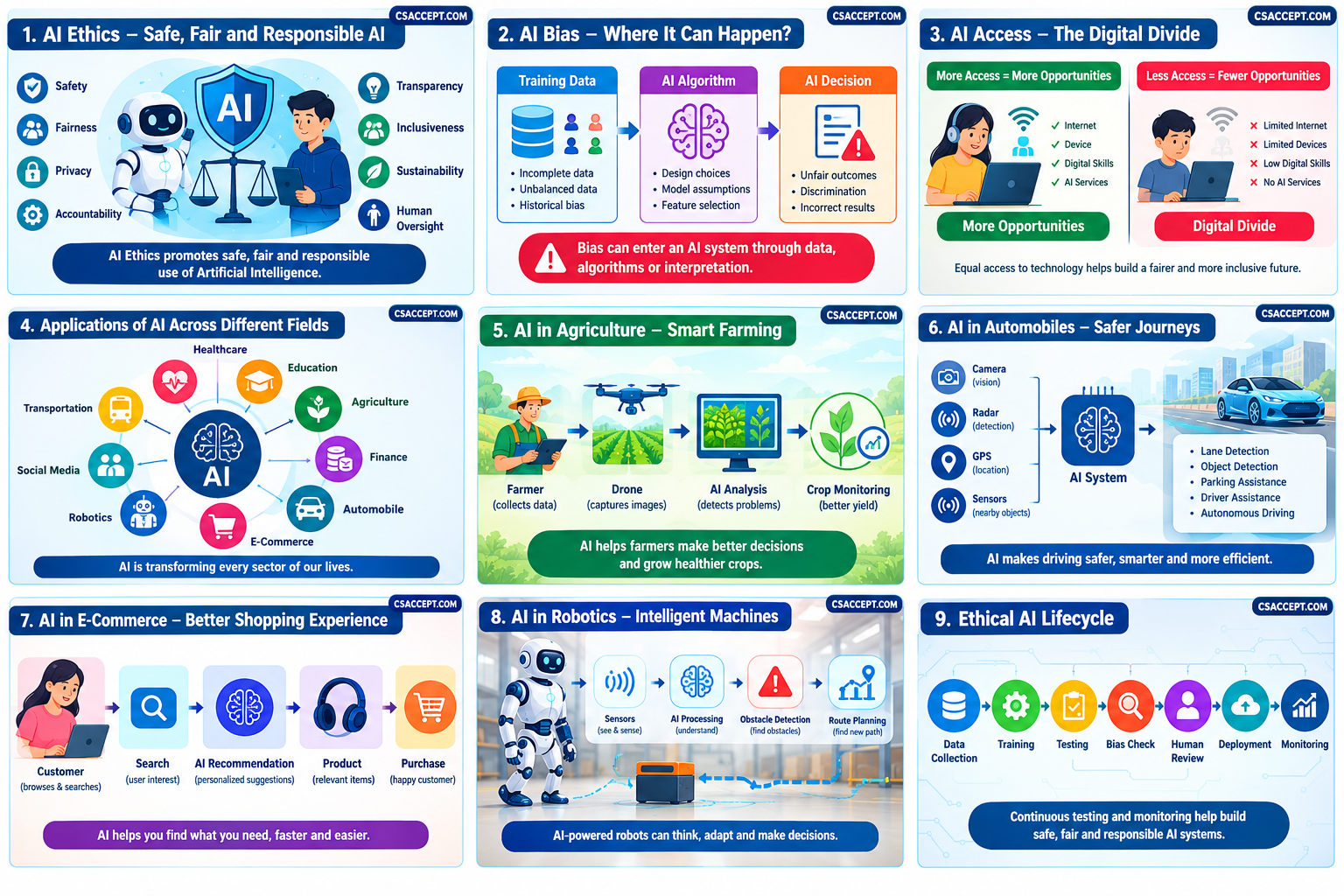
8. Applications of ICT

9. Examples of ICT in Daily Life
- Sending emails to colleagues.
- Attending online classes.
- Making video calls with family.
- Shopping on e-commerce websites.
- Booking train or flight tickets online.
- Using GPS for navigation.
- Paying bills through mobile banking.
- Watching educational videos.
- Using cloud storage to save files.
- Working remotely using collaboration software.
10. Future Trends in ICT
The major future trends in ICT include:
- Artificial Intelligence (AI)
- Internet of Things (IoT)
- Cloud Computing
- Big Data Analytics
- 5G and future mobile networks
- Blockchain Technology
- Cybersecurity advancements
- Virtual Reality (VR) and Augmented Reality (AR)
- Quantum Computing
- Smart Cities
11. Real-Life Examples
- Education: A university uses an online learning platform where students submit assignments and attend virtual lectures.
- Healthcare: A hospital stores patient records electronically, allowing doctors to access medical histories instantly.
- Business: An online retailer processes customer orders, payments, and deliveries through integrated ICT systems.
- Banking: Customers transfer money, check account balances, and pay utility bills using mobile banking apps.
- Agriculture: Farmers use smartphone applications to monitor weather forecasts and market prices before selling crops.
12. Conclusion
Information and Communication Technology (ICT) has transformed the way people communicate, learn, work, conduct business, and access services. By integrating computers, software, communication networks, and digital devices, ICT enables faster information sharing, improved decision-making, and greater efficiency across education, healthcare, business, government, banking, agriculture, and entertainment.
Although ICT presents challenges such as cybersecurity risks and privacy concerns, its benefits are significant, making it an essential part of modern life and a key driver of economic and social development.