LAV PRATAP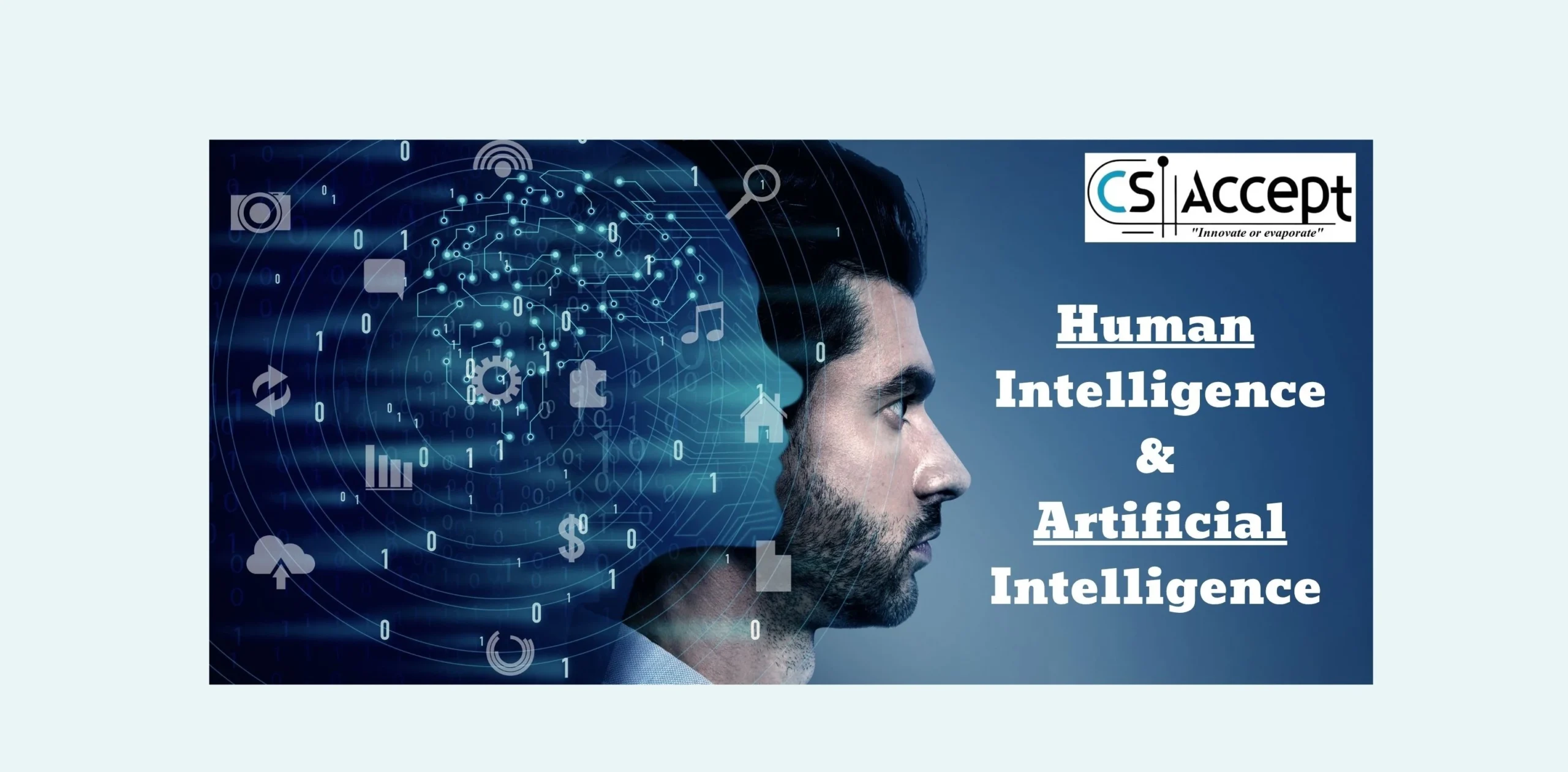
csaccept.com is a computer awareness website dedicated to providing reliable and easy-to-understand information about computer technology and digital safety. The website focuses on educating students, beginners, and general users about computer basics, cyber security, emerging technologies, and practical IT skills. Through informative articles, quizzes, and real-life examples, csaccept.com aims to increase digital literacy and help users stay safe and confident in today’s technology-driven world.
 Facebook ………………..
  Instagram ……………..
  Twitter ( X ) ……………..
  YouTube
Difference Between Human Intelligence and Artificial Intelligence
Introduction
Human Intelligence and Artificial Intelligence are two important types of intelligence used to solve problems and make decisions.
- Human Intelligence (HI) is the natural ability of humans to think, learn, understand, and apply knowledge.
- Artificial Intelligence (AI) is the intelligence shown by machines or computers that are programmed to perform tasks like humans.
Detailed Comparison Table
| Basis | Human Intelligence | Artificial Intelligence |
|---|---|---|
| Definition | Natural ability of humans to think, understand, and learn | Intelligence demonstrated by machines or computers |
| Learning | Learns from experience, observation, and understanding | Learns from data, training, and algorithms |
| Thinking Ability | Creative, flexible, and can think in new ways | Limited to programmed logic and patterns |
| Decision Making | Based on logic, emotions, ethics, and past experiences | Based on data, rules, and programmed instructions |
| Emotions | Has emotions, feelings, and empathy | No emotions or feelings |
| Speed | Slower in processing large amounts of data | Very fast in processing large data |
| Adaptability | Can easily adapt to new and unknown situations | Needs retraining or reprogramming to adapt |
| Accuracy | May make mistakes due to bias or emotions | Highly accurate if properly programmed |
Explanation with Suitable Examples
1. Learning
- Human Intelligence:
Humans learn from real-life experiences.
Example: A student learns math by practicing problems and understanding concepts. - Artificial Intelligence:
AI learns from large datasets using algorithms.
Example: A recommendation system like YouTube suggests videos based on your watch history.
2. Thinking Ability
- Human Intelligence:
Humans can think creatively and imagine new ideas.
Example: An artist creates a new painting based on imagination. - Artificial Intelligence:
AI follows programmed logic and patterns.
Example: A chess-playing AI calculates moves but cannot create new rules of the game.
3. Decision Making
- Human Intelligence:
Decisions are influenced by emotions, ethics, and personal experience.
Example: A teacher may give extra marks to a hardworking student. - Artificial Intelligence:
Decisions are purely data-driven.
Example: An AI system approves or rejects a loan based on financial data.
4. Emotions
- Human Intelligence:
Humans have feelings like happiness, sadness, anger, and empathy.
Example: A person comforts a friend who is sad. - Artificial Intelligence:
AI cannot feel emotions.
Example: A chatbot can reply politely but does not actually feel anything.
5. Speed
- Human Intelligence:
Humans take time to calculate and process information.
Example: Solving a complex math problem manually. - Artificial Intelligence:
AI can process millions of calculations in seconds.
Example: A computer solving complex equations instantly.
Conclusion
Human Intelligence is natural, emotional, and creative, while Artificial Intelligence is man-made, fast, and data-driven. Both have their own advantages, and together they can make powerful systems that improve our daily lives.

Multiple Choice Questions (MCQs) –
- Human Intelligence is a ______ ability.
a) Artificial
b) Natural ✅
c) Mechanical
d) Digital - Artificial Intelligence is shown by ______.
a) Humans
b) Animals
c) Machines ✅
d) Plants - AI mainly learns from ______.
a) Experience
b) Emotions
c) Data and algorithms ✅
d) Nature - Human Intelligence is ______.
a) Fixed
b) Creative and flexible ✅
c) Mechanical
d) Robotic - AI decision making is based on ______.
a) Emotions
b) Ethics
c) Data and rules ✅
d) Feelings - Humans have ______.
a) No emotions
b) Emotions and feelings ✅
c) Only logic
d) Only data - AI systems are ______ in processing data.
a) Slow
b) Fast ✅
c) Emotional
d) Weak - Human learning is based on ______.
a) Algorithms
b) Programming
c) Experience ✅
d) Machines - AI cannot ______.
a) Calculate
b) Learn
c) Feel emotions ✅
d) Process data - Human Intelligence is influenced by ______.
a) Data only
b) Rules only
c) Emotions and ethics ✅
d) Machines - AI works on ______ logic.
a) Creative
b) Emotional
c) Programmed ✅
d) Natural - Humans are ______ adaptable.
a) Less
b) Not
c) Highly ✅
d) Zero - AI needs ______ to improve.
a) Sleep
b) Training and data ✅
c) Food
d) Emotions - Which is faster?
a) Human
b) AI ✅
c) Both same
d) None - Which has creativity?
a) AI
b) Human Intelligence ✅
c) Both
d) None - AI is ______ made.
a) Natural
b) Man-made ✅
c) Biological
d) Emotional - Humans may make mistakes due to ______.
a) Speed
b) Emotions ✅
c) Data
d) Machines - AI accuracy depends on ______.
a) Emotions
b) Programming ✅
c) Mood
d) Nature - Human Intelligence uses ______ thinking.
a) Fixed
b) Logical and emotional ✅
c) Only digital
d) Only mechanical - AI cannot ______ new ideas independently.
a) Process
b) Think creatively like humans ✅
c) Calculate
d) Learn
Fill in the Blanks –
- Human Intelligence is a ______ ability. (natural)
- Artificial Intelligence is shown by ______. (machines)
- Humans learn from ______. (experience)
- AI learns from ______ and algorithms. (data)
- Humans have ______ and feelings. (emotions)
- AI has ______ emotions. (no)
- AI is very ______ in processing data. (fast)
- Humans are ______ in processing large data. (slower)
- AI decisions are based on ______ and rules. (data)
- Human thinking is ______ and flexible. (creative)
- AI works on ______ logic. (programmed)
- Humans can easily ______ to new situations. (adapt)
- AI needs ______ to improve. (training)
- Human decisions include ______ and ethics. (emotions)
- AI is a ______-made intelligence. (man)
True / False –
- Human Intelligence is natural. (True)
- AI has emotions like humans. (False)
- AI learns from data and algorithms. (True)
- Humans cannot think creatively. (False)
- AI is faster than humans in data processing. (True)
- Human decisions are based only on data. (False)
- AI is man-made intelligence. (True)
- Humans learn only from machines. (False)
- AI cannot feel emotions. (True)
- Humans are less adaptable than AI. (False)
- AI accuracy depends on programming. (True)
- Humans always make perfect decisions. (False)
- AI uses programmed logic. (True)
- Humans have no emotions. (False)
- AI can fully replace human creativity. (False)